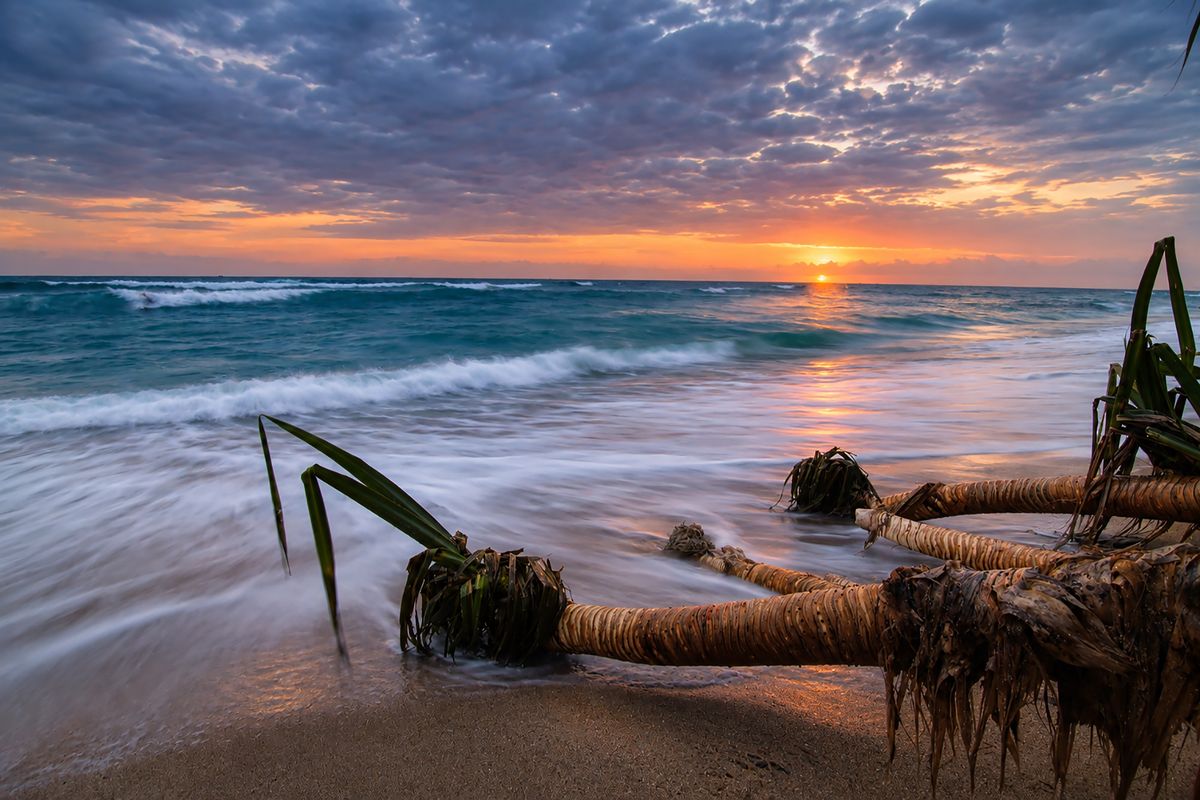
Seascape photography offers the chance to capture the dynamic beauty of the coast. These ten essential tips will guide you in creating breathtaking images of the ocean's power and serenity.
01. Choose the Right Location
Look for seascape photography spots with captivating skies, unique rock formations, and pristine waters. Consider the time of day and season when planning your shoot. Check the weather forecast and tide charts before you go. The best time to shoot seascapes is during the golden hours of dawn and dusk, when the sun's low angle creates beautiful, soft light.
If you're shooting in the middle of the day, try to find a spot with dappled shade to create interesting patterns of light and shadow, or shoot on an overcast day. Tide charts can reveal interesting foregrounds at low tide or dramatic waves at high tide, and ensure your safety.
02. Optimal Lighting
The golden hours of dawn and dusk are the best times for seascape photography. The low angle of the sun creates beautiful, soft light that enhances the colours in your photos. An overcast day can also provide beautifully diffused light. Use a polarising filter to reduce glare on the water and wet rocks, and to enhance colours.
03. Steady Tripod
A sturdy tripod is essential for seascape photography, especially if you're using a slow shutter speed to capture water movement or shooting in low light. It prevents camera shake and ensures your photos are sharp and clear.
04. Wide-Angle Lens
A wide-angle lens is perfect for capturing the vastness of the ocean and the surrounding landscape. It also helps you get more of the sky in your photos, which is important for capturing the beautiful colours of sunrise and sunset. Alternatively, stitch multiple photos into a panorama.
05. Composition Exploration
Use leading lines — like the edge of the water, rocks, or piers — to guide the viewer's eye into the photo. Frame your shots with interesting foreground elements such as rocks, driftwood, or patterns in the sand. The rule of thirds divides the frame and places the main subject or horizon at an intersection or along a line.
06. Enhancing Filters
Graduated ND filters balance exposure between the bright sky and darker foreground, especially crucial during sunrise or sunset seascapes. Solid ND filters allow for longer exposures to create silky smooth water effects. Polarising filters reduce glare from the water's surface and significantly enhance colours and contrast.
07. Post-Processing Brilliance
Use Adobe Lightroom and Photoshop to adjust colour balance, contrast, and exposure for optimal impact. Enhance details in highlights and shadows, especially in dynamic coastal scenes. Add creative effects like HDR for scenes with extreme contrast, or carefully apply local adjustments to guide the viewer's eye.
08. Share Your Vision
Share your captivating seascape photos on social media, your photography website, and relevant photography platforms. Entering competitions can provide valuable feedback, exposure, and recognition.
09. Patience Pays Off
Seascape photography often requires patience. Wait for the right light, the perfect wave, or a dramatic cloud formation. Observe the environment and anticipate changes to capture unique moments.
10. Tide Chart Insight
Use tide charts to plan your sessions. Low tide can reveal interesting rock formations and tide pools, while high tide can bring dramatic crashing waves. Understanding tides is also crucial for your safety and ensuring a successful shoot without risking your gear.
With these tips and practice, you'll be well-equipped to capture the stunning and ever-changing beauty of the sea.